
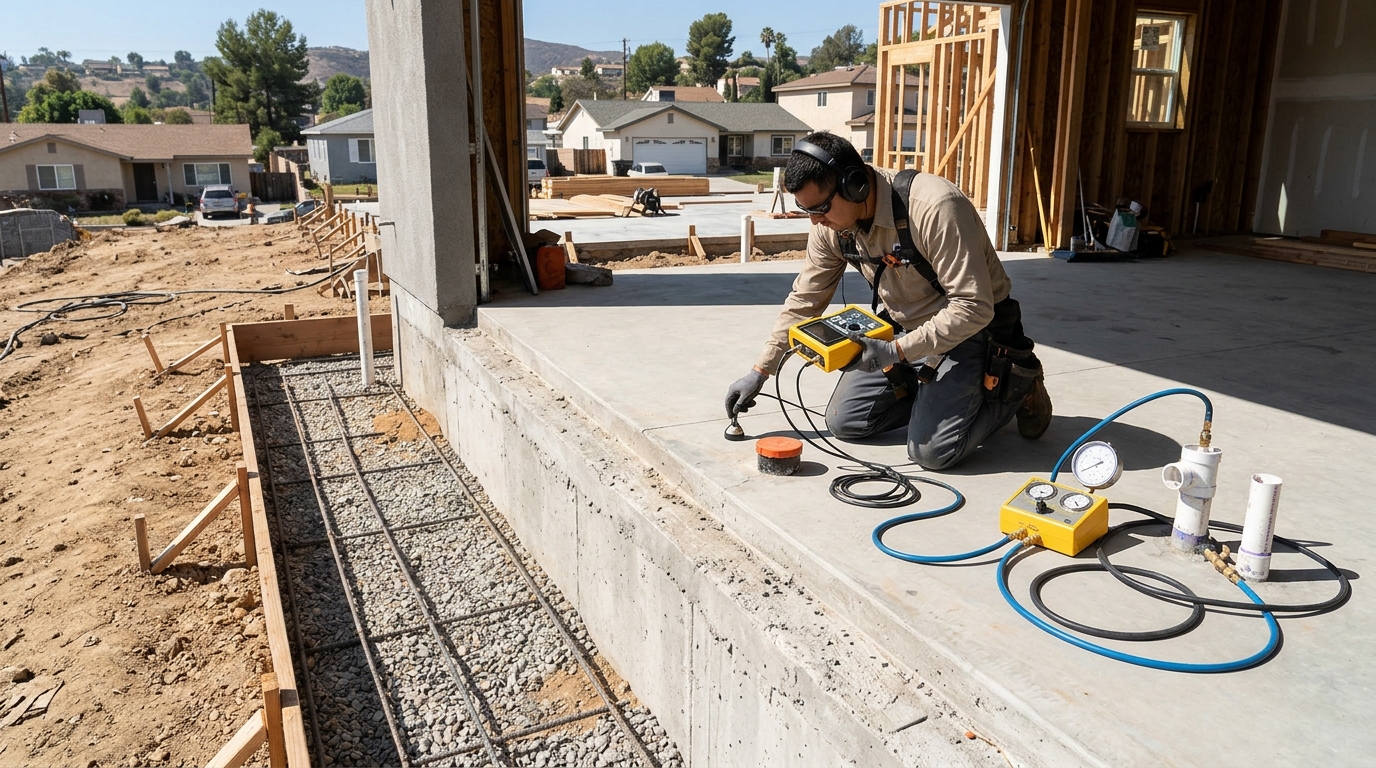
Understanding Slab Leaks in Citrus Heights Residences
A slab leak occurs when the pressurized copper water supply lines installed underneath a home's poured concrete slab foundation develop fractures, cracks, or pinholes. In Citrus Heights, thousands of single-family tract homes were constructed between the 1960s and 1990s using copper piping encased directly in concrete or buried beneath base gravel. Over decades, constant hot and cold water cycles, natural chemical interactions from municipal water, and soil shifting take a severe toll on subterranean plumbing.
Our local climate features blistering summer heat paired with expansive clay soils throughout Sacramento County. As clay expands during wet winter months and shrinks drastically during summer dry spells, foundation slabs experience subtle ground movement. This repeated mechanical friction rubs bare copper against coarse aggregate and concrete, eventually causing friction thinnings, cracks, or complete line breaks. When a homeowner notices moisture or warm spots, hiring an experienced slab leak plumber Citrus Heights trusts is essential to preserve property value and stop hidden water loss.
Critical Indicators of a Water Leak Under Slab Citrus Heights
Foundation leaks rarely stay silent. Because water takes the path of least resistance, sub-slab pressure eventually pushes moisture upward through microscopic pores in concrete or dampens perimeter footings. Homeowners should stay alert to these distinct red flags:
- Warm or Hot Spots on Flooring: Noticeable warmth on tile, linoleum, or carpet pointing to a hot water line leak under slab Citrus Heights.
- Sound of Running Water: Continuous hissing, rushing, or humming behind walls or through floors when all fixtures are shut off.
- Spinning Water Meter: The low-flow indicator dial spins even when faucets, hose bibs, and appliances are completely closed.
- Unexplained Spike in Utility Bills: Water or natural gas bills climbing sharply without increased household water usage.
- Damp Flooring or Baseboard Warping: Darkened grout lines, discolored hardwood, spongy laminate, or swollen drywall along baseboards.
- Persistent Mildew Odor: Musty smells trapped under rugs or carpets indicating prolonged subterranean moisture saturation.
Immediate Action Steps While Waiting for Service
If you suspect an active under slab leak repair Citrus Heights scenario, immediately locate your home's main water shutoff valve near the front hose bib or curb meter box and turn the valve clockwise to stop pressurized water flow. If the leak is on the hot water line, shut off the cold feed valve at the top of your water heater. Document damp areas with clear photographs, and avoid breaking concrete yourself.
How Electronic Detection and Repair Work Step by Step
Locating a leak under foundation Citrus Heights without tearing up entire floors requires modern non-invasive diagnostic tools. Our multi-step detection methodology guarantees precise pinpointing before any concrete is disturbed:
-
1. Isolation & Pressure Verification
We test static pressure on isolated cold and hot plumbing loops. Isolating the system confirms whether the leak exists on the potable supply line, irrigation feed, or heating loop.
-
2. Electromagnetic Line Tracing
Specialized frequency transmitters induce signals along subterranean copper runs, mapping the exact underground layout through your slab floor.
-
3. Acoustic Listening & Infrared Thermography
Ground microphones filter ambient room sounds to hear water escaping pressurized pipes under concrete, while thermal cameras reveal heat blooms from failing hot water lines.
-
4. Strategic Restoration Plan
With the exact failure spot identified, we review tailored repair options: localized direct spot repair, modern overhead line rerouting, or whole-house repiping.
Slab Leak Repair Cost Factors in Citrus Heights
Understanding slab leak repair cost Citrus Heights involves assessing multiple physical variables rather than applying a single generic flat rate. Three primary repair avenues exist:
Direct Spot Repair
When a single isolated physical defect occurs under easily accessible flooring, jackhammering a small concrete access port allows a technician to cut out the failing copper segment and braze a new seamless copper replacement. Spot repairs are economical for newer foundations, but disturbing older brittle pipe can risk future adjacent failures.
Overhead Line Reroute
Rather than demolishing interior tile or hardwood, a non-invasive slab leak reroute abandons the failing subterranean line entirely. A fresh, flexible PEX or copper pipe is routed through interior wall cavities and ceiling attics, creating a permanent above-ground supply line with minimal disruption.
Variables that influence overall project cost include the pipe depth beneath the foundation, the type of flooring material installed overhead, accessibility of interior walls, and whether repeated pinholes indicate widespread pipe wall degradation requiring whole-home attention.
Specialized Foundation & Water Line Services
Every plumbing system requires specialized diagnostic and remediation techniques. Explore how our focused service offerings integrate to address foundation plumbing concerns across Citrus Heights:
Slab Leak Detection
Pinpoint exact leak coordinates through concrete foundations using acoustic ground sensors and line locators. Learn how slab leak detection prevents unnecessary floor demolition.
Learn More →Hot Water Slab Leaks
Thermal expansion makes hot supply lines vulnerable to early cracking under floors. Discover how hot water slab leak repair resolves warm spots and running heaters.
Learn More →Slab Leak Reroutes
Bypass broken lines entirely by running durable PEX lines through attics and partition walls. See why our slab leak reroute protects expensive finish flooring.
Learn More →Whole-House Repiping
When aging copper develops repeated failures throughout your foundation, modern whole-house repiping eliminates subterranean plumbing risks permanently.
Learn More →Water Leak Detection
We locate hidden water leaks behind walls, beneath subfloors, and across exterior main lines. Explore our comprehensive water leak detection services.
Learn More →Pinhole Leak Repair
Stop recurring copper pipe pitting and water erosion. Learn how pinhole leak repair fixes localized pipe flaws before major water damage spreads.
Learn More →Assistance with Insurance Documentation
Navigating homeowners insurance claims following foundation water damage can feel overwhelming. Many standard policies differentiate between the physical pipe repair itself, the invasive tear-out needed to access sub-slab plumbing, and resulting water damage to floors, cabinetry, and drywall. Our team provides formal, non-invasive diagnostic reports complete with thermal imagery, pressure charts, and precise diagrams to assist with slab leak insurance documentation.
Serving Neighborhoods Across Citrus Heights
We serve residential neighborhoods throughout the city, providing prompt diagnostic assistance whether you need slab leak repair near Sunrise Mall area, slab leak repair near Sylvan Corners, or slab leak repair near Antelope border subdivisions. From older mid-century ranch homes off Sunrise Boulevard to contemporary developments near I-80, our technicians understand the distinct foundation soil conditions and plumbing configurations of Sacramento County. Explore our full regional footprint on our Citrus Heights service areas page.
Citrus Heights Slab Leak Questions & Answers
The primary drivers are aging copper water supply lines reacting with minerals in local water supplies, combined with seasonal expansion and contraction in Sacramento County's native clay soils. As the foundation shifts slightly over decades, friction against concrete aggregate wears down pipe walls, resulting in pinholes or breaks.
No. Jackhammering is only necessary for direct spot repairs. In most modern cases, homeowners prefer an overhead line reroute through attic or wall framing, which leaves expensive finish flooring completely intact and avoids cutting into the foundation slab.
We isolate the hot water loop by shutting the supply valve at the water heater while monitoring meter rotation and line pressure. If the water meter stops moving or the hot system holds static pressure, the leak is located on the corresponding loop. Thermal imaging cameras also quickly reveal warm water pooling under floorboards.